
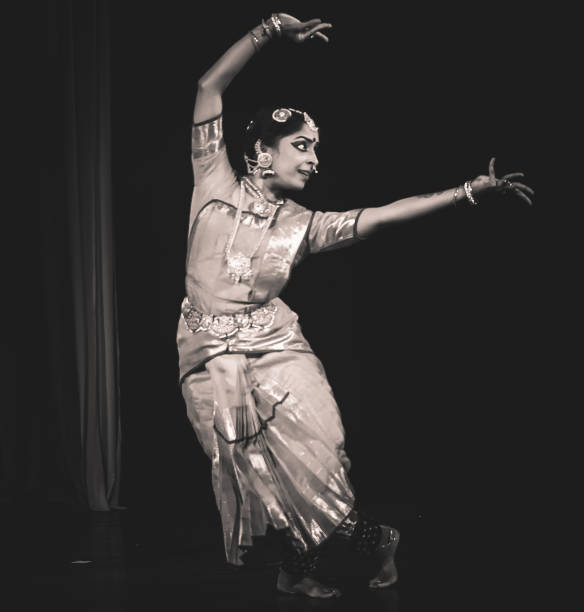
Bharatanatyam, the jewel of Indian classical dances, has profoundly shaped the entire classical dance landscape through its revival, global reach, and innovative fusions. With over 2,000 years of history rooted in Tamil Nadu’s temples, it blends rhythmic footwork, expressive gestures, and storytelling to captivate audiences worldwide.
Ancient Roots and Revival
Bharatanatyam originated as a sacred temple ritual called Sadir, performed by devadasis who embodied devotion through intricate mudras and abhinaya (facial expressions). Facing colonial suppression and social stigma in the early 20th century, it nearly vanished until pioneers like E. Krishna Iyer and Rukmini Devi Arundale revived it. Rukmini Devi’s Kalakshetra Academy in the 1930s transformed it from a marginalized art to a proscenium-stage spectacle, preserving its essence while making it accessible to upper-class audiences.
This revival sparked state-sponsored festivals post-1955 independence, uniting regional dances under a national banner and elevating Bharatanatyam’s status as India’s premier classical form.
Technical Innovations
Bharatanatyam’s structured grammar—nritta (pure dance), nritya (expressive), and natya (dramatic)—set benchmarks for precision and storytelling. Its adavus (basic steps) and 108 karanas (poses) carved on Chidambaram Temple walls influenced other forms like Kathakali and Odissi in footwork and hastas (hand gestures).
The role of the nattuvanar, conducting with cymbals and vocals, standardized rhythmic complexity (tala), inspiring similar guru-led training across classical styles.
Global Expansion
Today, Bharatanatyam thrives in diasporic communities in the US, UK, and Singapore, with schools and festivals reinforcing cultural identity. Legends like Balasaraswati took it to international stages in the mid-20th century, blending spirituality with universal appeal.
Its globalization mirrors ballet’s trajectory, now taught in Western academies and researched academically, drawing multicultural performers.
Economic Powerhouse
Bharatanatyam drives India’s dance economy via studios, festivals like Natyanjali, and tourism, generating jobs in teaching, costumes, and events. Performances boost local businesses—hotels, transport—while digital platforms reach 470 million Indian social media users, amplifying reach.
A 2024 report notes 58% of Gen Z dancers explore its fusions, fueling a growing performing arts market.
Cultural and Social Influence
By addressing modern themes like gender equality and environment, Bharatanatyam promotes inclusivity, challenging its Brahminical past. It empowers through fitness benefits—improved flexibility, focus—and social impact programs in education and therapy.
For studios like Pune’s Nrityanandan, it offers beginner-to-advanced classes, blending tradition with community building.
Fusion Frontiers
Choreographers fuse Bharatanatyam’s rhythms with ballet, hip-hop, and contemporary, enriching Western dance’s expressiveness. Examples include rhythmic body percussion in tap and fluid mudras in modern pieces, creating hybrid styles that attract diverse audiences.
This innovation expands classical dance’s relevance, with Gen Z videos on Instagram and TikTok de-ritualizing it for global youth.
Modern Challenges and Trends
Digital reels and online classes sustain growth amid urbanization, though commercialization risks dilution. Sustainability lies in hybrid models—festivals, apps, VR—that honor roots while innovating.
Therapeutic applications in mental health further broaden its societal role.
Future Horizons
Bharatanatyam will lead fusions and inclusivity, potentially dominating via AI choreography and metaverse performances. Its resilience ensures classical dance’s evolution, inviting all—like beginners at Nrityanandan—to join the rhythm.